From Crisis to Reform: How Bangladesh Plans to Reduce Import Dependency Through Fuel Switching
Headline
Note: Compelling title emphasizing Bangladesh's strategic pivot from import dependency to energy reform
Lead
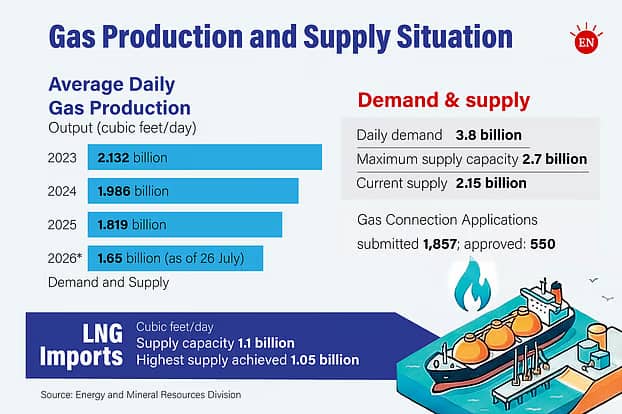
Note: Open with the stark reality: 95% import dependency, recent FSRU failures causing 450 mmcfd shortfall, and the $2+ billion financing gap driving urgent reform
Crisis Context: The Perfect Storm
Note: Detail the 2022-2024 timeline of escalating vulnerabilities—dwindling domestic gas, LNG spot price volatility, synchronized FSRU maintenance exposing infrastructure fragility
The Cost of Dependency
Note: Quantify the economic burden using the Chattogram blackout case study, 2.5-month FSRU downtime, and absence of redundancy as evidence of systemic risk
The Five-Pillar Reform Agenda
Note: Unpack Adviser Titumir's May 2026 announcement: renewable budgets, income-linked pricing, clean energy framework, BAPEX revival, strategic reserves as integrated response
Fuel Switching Through Efficiency
Note: Analyze the $460 million annual savings potential from gas-fired captive power efficiency and waste-heat recovery, positioning demand-side management as 'virtual fuel switching'
The 50 bcf Solution
Note: Examine IEEFA's modeling showing mandatory energy audits and SREDA deployment could cut LNG imports by 50.18 bcf/year—equivalent to major new supply infrastructure
Implementation Gaps and Financing Hurdles
Note: Assess existing policy instruments versus execution barriers: the $2 billion funding need, weak enforcement of audits, and gaps in efficiency incentive structures
Regional Context and Geopolitical Dimensions
Note: Compare Bangladesh's 95% import share to South Asian peers; touch on Japan-Bangladesh energy cooperation and strategic implications of import diversification
Timeline to Impact
Note: Map realistic milestones from 2026 reform announcement to measurable outcomes—renewable deployment curves, efficiency rollout schedules, reserve accumulation targets
Conclusion: From Fragility to Resilience
Note: Synthesize how fuel switching (both literal and virtual via efficiency) represents Bangladesh's pathway from crisis-driven emergency responses to structural energy security