


11 Aug 2026, 9:39 AM - Digest
Taiwan, South Korea drive Asian equity outflows in July as AI worries bite
Trending
Longread - 13 August 2026 - 10:43 AM
By Pete McBride, National Geographic
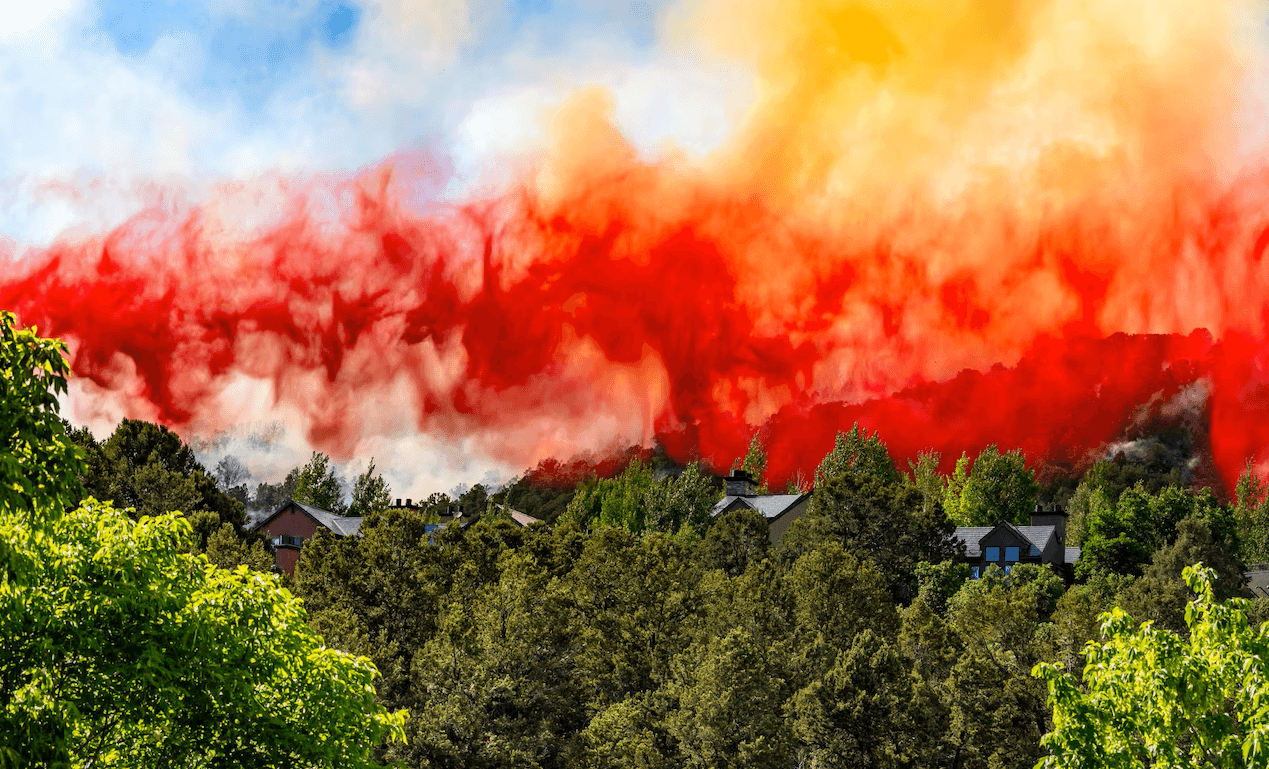
It’s 6 am in mid-July, and I’m standing in a fairground turned firefighter camp in the small town of Ridgway, Colorado, listening to a morning briefing about the 38,000-acre Gold Mountain fire just to the east. Fingers of smoke settle in drainages coming off the Cimarron range and San Juan Mountains stretching skyward around us. The sky is cloudless and light blue as alpenglow paints the peaks nearby. Fire experts give weather forecasts (monsoonal rains predicted), containment updates (14 percent), safety protocols, and more.In every direction on the compass from where we stand, there are a dozen plus fires raging, varying in intensity and size. Some are record-breaking like the Aspen Acres near Pueblo, east of the Continental Divide. It has burned over 100,000 acres and destroyed 337 homes and over 800 structures so far. Between Aspen Acres and Gold Mountain is another fire as well—the Elk Fire, cresting the wooded 10,000-foot ridgelines. And the infernos aren’t just limited to Colorado. So far, it’s been a record fire season for the American West, one that is stretching resources and teams across the nation. Real-time apps that track wildfires are lit up with orange icons, showing blazes across almost every Western state: Utah’s Babylon, Oregon’s Grasshopper Fire near Mount Hood, eastern Washington’s wildfires torching Spokane, the Quail Springs blaze by Nevada’s Area 51. As a result, Washington’s under a state of emergency and the United States as a whole is at Planning Level 5, or PL5, the highest level—which means that every fire crew, hotshot team, helicopter and resourceis requested or in use.
Globally, current wildfire statistics are equally alarming. Some 7.4 million acres have burned across Canada, with much still burning. France, Spain and Greece are all facing extreme blazes and evacuations. With fires raging across cities, counties, and continents, 2026 is proving to be one of the most severe fire seasons yet.
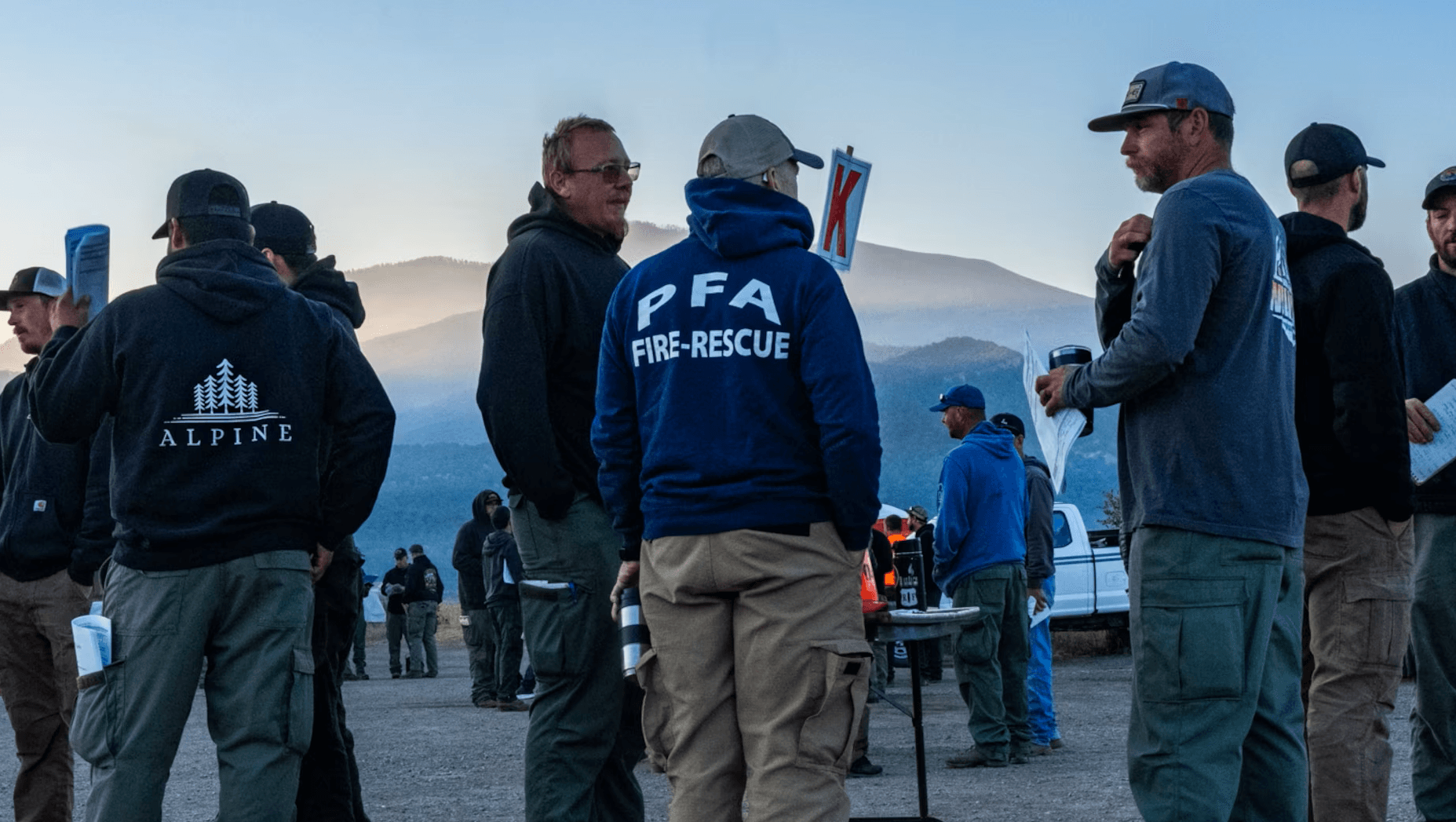
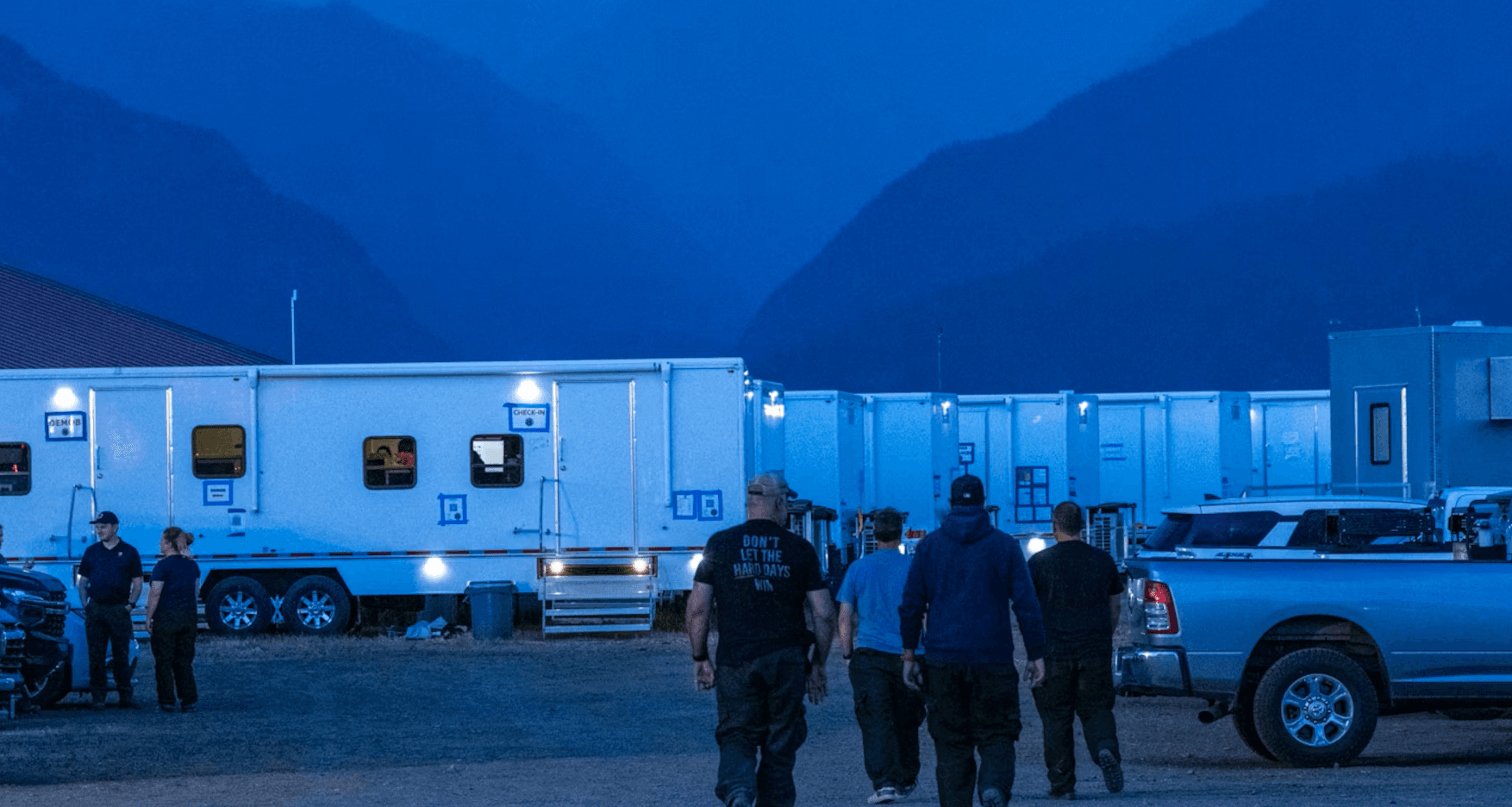
At the Ridgway fairground, a safety expert announces updates over a loudspeaker to hundreds of firefighters and support crews taking in the information: “We are near the peak of this. Details matter. Be focused and take care of each other.” Nearly everyone here is wearing forest-green cargo pants and boots and clutching large cups of black coffee. Patches and logos adorn shirts, ball caps and hoodies displaying unit teams and regions: Alpine, Salt Lake, Redwood. Some 900 firefighters from 37 states and the Virgin Islands have traveled here—nearly doubling Ridgway’s normal population—to fight the blaze that’s still visible in pockets on the mountain looming above us. To support them, a pop-up mobile tent and trailer town has been erected and organized meticulously. It boasts briefing spaces, offices, dining facilities and specialized catering trailers that ensure each firefighter get 5,000 calories a day—all coordinated to support units on the ground cutting to fire breaks as well as those at the fire line.
Despite the clear morning sunrise, a heaviness hangs over us. Two days prior, an experienced Canadian firefighting helicopter pilot, Nicolas Dale, crashed while dipping water from Silver Jack Reservoir just to the northeast. A few witnessed the tragedy, but no one knows what went wrong. After the briefing, I meet Jamie Carpenter, a team leader with Incident Team 2 from Boulder County, Colorado. Carpenter has worked as a firefighter for 22 years and is currently managing roughly 100 people, about four to five crews, as well as equipment and resources, across a two-mile stretch of fire line just north. I ask him about the toughest part of the job. After pausing, he swallows back some emotions and says, “Our work is inherently dangerous, so the hardest part is knowing that I’m putting people in harm’s way. Despite our best efforts to mitigate hazard, sometimes people get hurt and worse.” After a pause, he adds with a cracked voice, “It’s hard.”
By 7 AM, a line of trucks carrying firefighters, chainsaws, and tools turns left from the fairgrounds and heads to the front lines of the Gold Mountain fire. Those left at the fairground retreat to a command office where maps and data fill tables and walls. Leaders record video updates for the pubic while others from the Forest Service, the Bureau of Land Management, flight operations, and more hunker on phones and laptops and orchestrate logistics.
The incident command team working the Gold Mountain fire during my visit is one of many called in for 14-day stints. They are made up of specialists from federal and local authorities, typically organized by region. After their two-week duty, most will get only a few days off before being putting back in rotation to move to another fire, wherever they are needed. And this summer, they are needed everywhere.
Twelve hours later, I meet Cameron Sessor at a road closure on the west boundary of Section Foxtrot. (Large fires are organized geographically by incident command centers, with paramilitary tactical frameworks based on regions—starting with Alpha, and Zulu, and filling in with sections as the fire grows.) He is captain with Salt Lake 1, a team of 21 firefighters who have spent seven years working together. Sessor himself has worked as a firefighter for 12 years. He hopes his current team will gain Hotshot status soon. Hotshots are elite, 20-person firefighting teams that tackle the most dangerous, remote and complex wildland fires. There are just over 100 interagency Hotshot crews in the U.S., all of which are heavily vetted and thus frequently requested. Right now, they are in high demand.
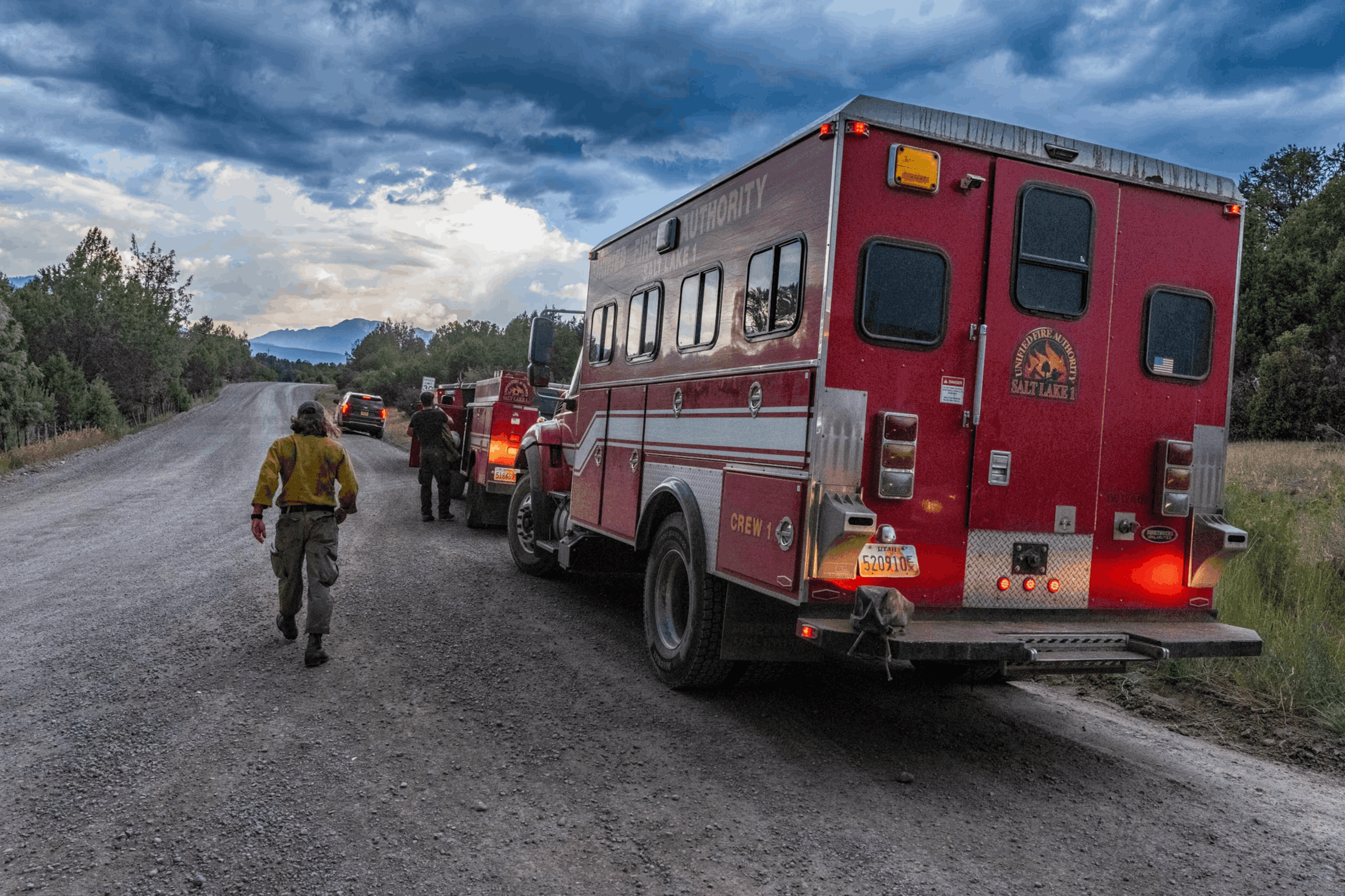
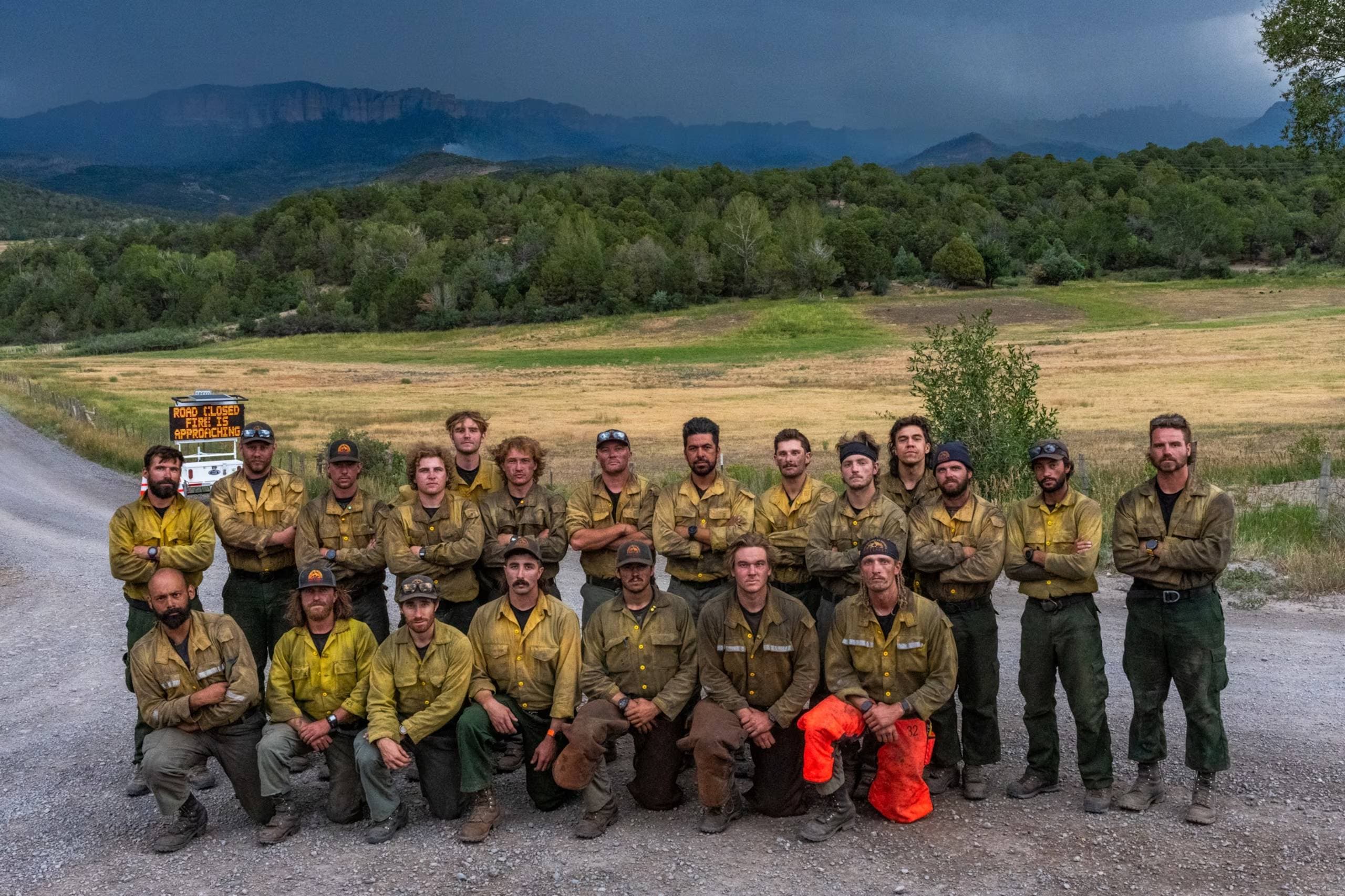
Sessor and his crew are covered in sweat and dirt, but they are visibly excited about their work. “It was a great day,” Sessor says, brimming with adrenaline. He shows me videos of the men cutting lines days earlier in Arizona as flames towered behind them. After Arizona, Sessor’s team was quickly relocated to Gold Mountain, where their expertise was specifically requested. I make portraits of the entire team. The firefighters stare into my lens with hardened eyes, but as their teammates rib them, many light up with laughter, revealing bright smiles. Their enthusiasm and camaraderie are palpable. If they reach their Hotshot status goal, it would elevate their responsibility, stature, and demand. It would also heighten their risk.
Jamie Carpenter, who leads Section Foxtrot and every crew in it, drives past, the last to leave for the day. He, too, is covered in dirt. He waves and heads to camp for dinner. Later, Carpenter tells me that Salt Lake 1 was brought in by request to attack the fire more aggressively. “They are as good or better than any crew I’ve seen,” he says.
When I ask Sessor about the risk he and his team face day to day, week to week, his answer surprises me. “The hardest part of the job, over the past 12 years has been the work-to-home balance and the transition back into normal life,” he says. “Last summer I was gone for about 120 days with little time off. You’re living in a highly structured, high-intensity environment for months where everything is urgent and regimented, then suddenly you’re dropped into the complete opposite. No structure, no schedule, just quiet.”
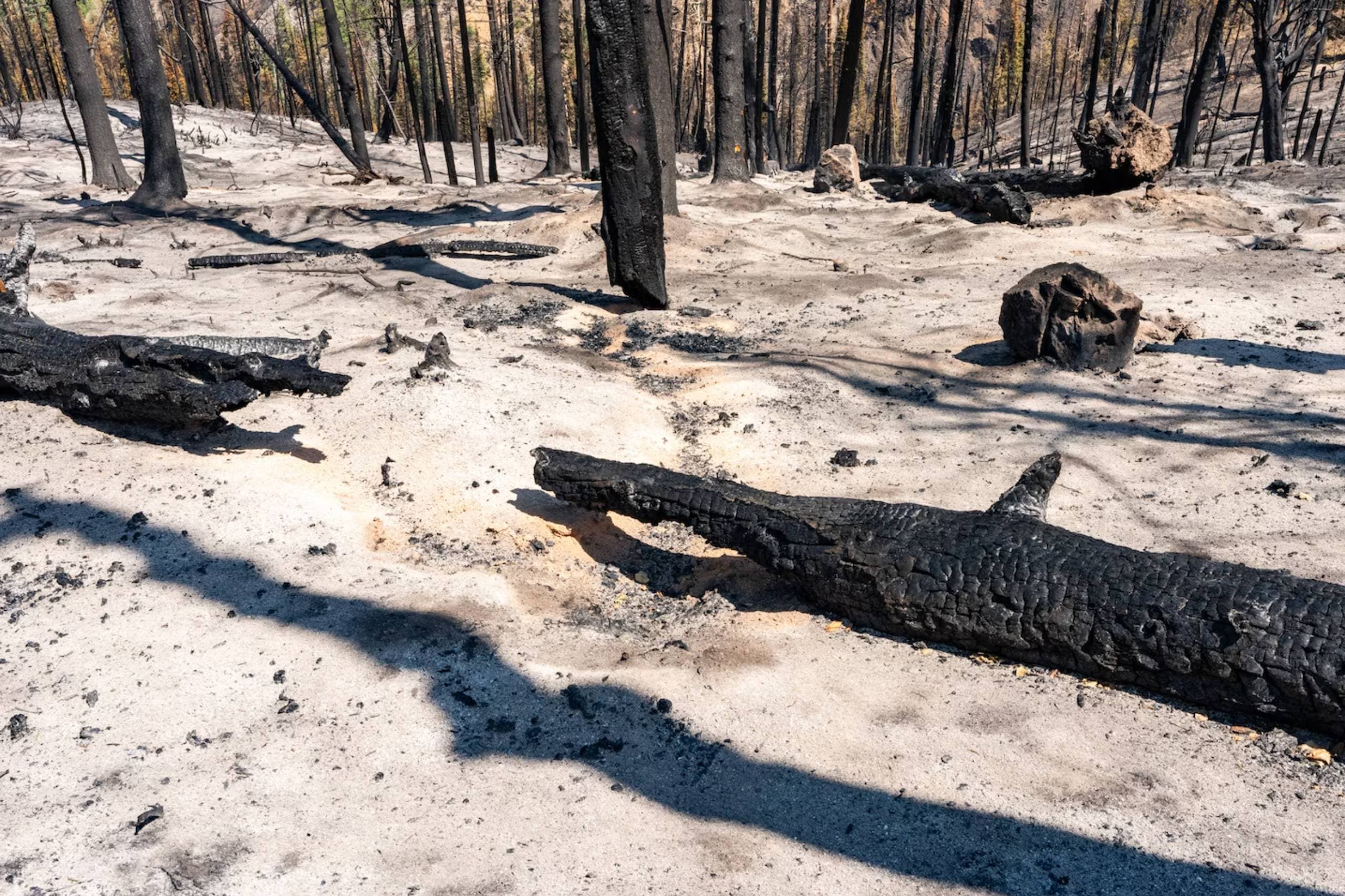
This season, Sessor’s team has already been on the road forfive 14-day tours and worked the frontlines in four states on a half-dozen fire. He expects they will be needed to travel and work on four or five more tours through the end of October.